Delve Deeper into Palestine
Welcome to our resources page. Here, you'll find articles and documents designed to provide context and foster a deeper understanding of Palestinian history. These resources are for anyone seeking to expand their knowledge. More will be added over time. Disclaimer: the views of individual contributions to this website are those of the individuals who present them and not necessarily endorsed by Forest Friends of Palestine.
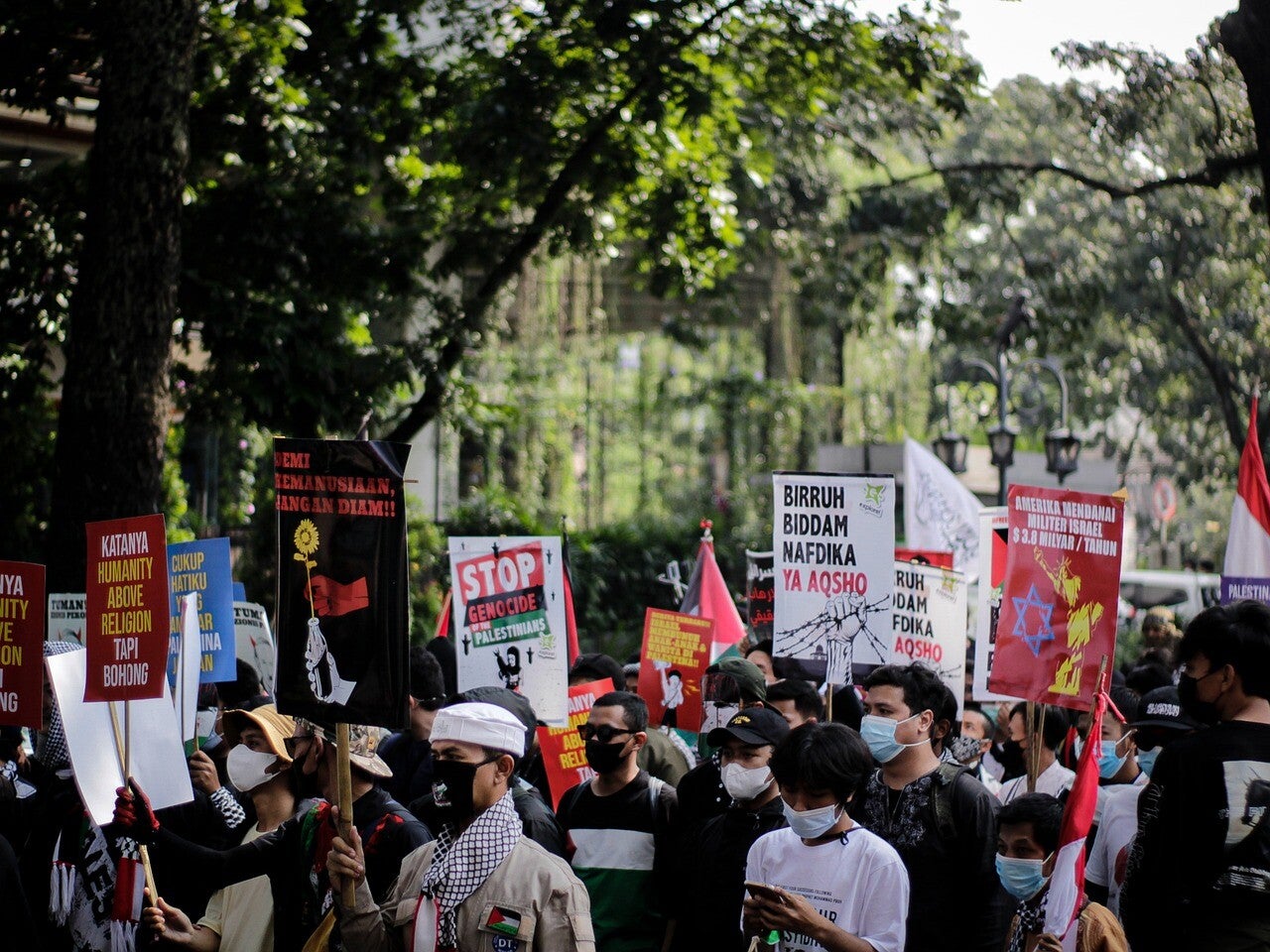
Current Policies of UK Political and other Parties
This pdf document details policies of the major UK political parties and churches, as well as Israeli government policy, the Palestine Authority and Hamas.
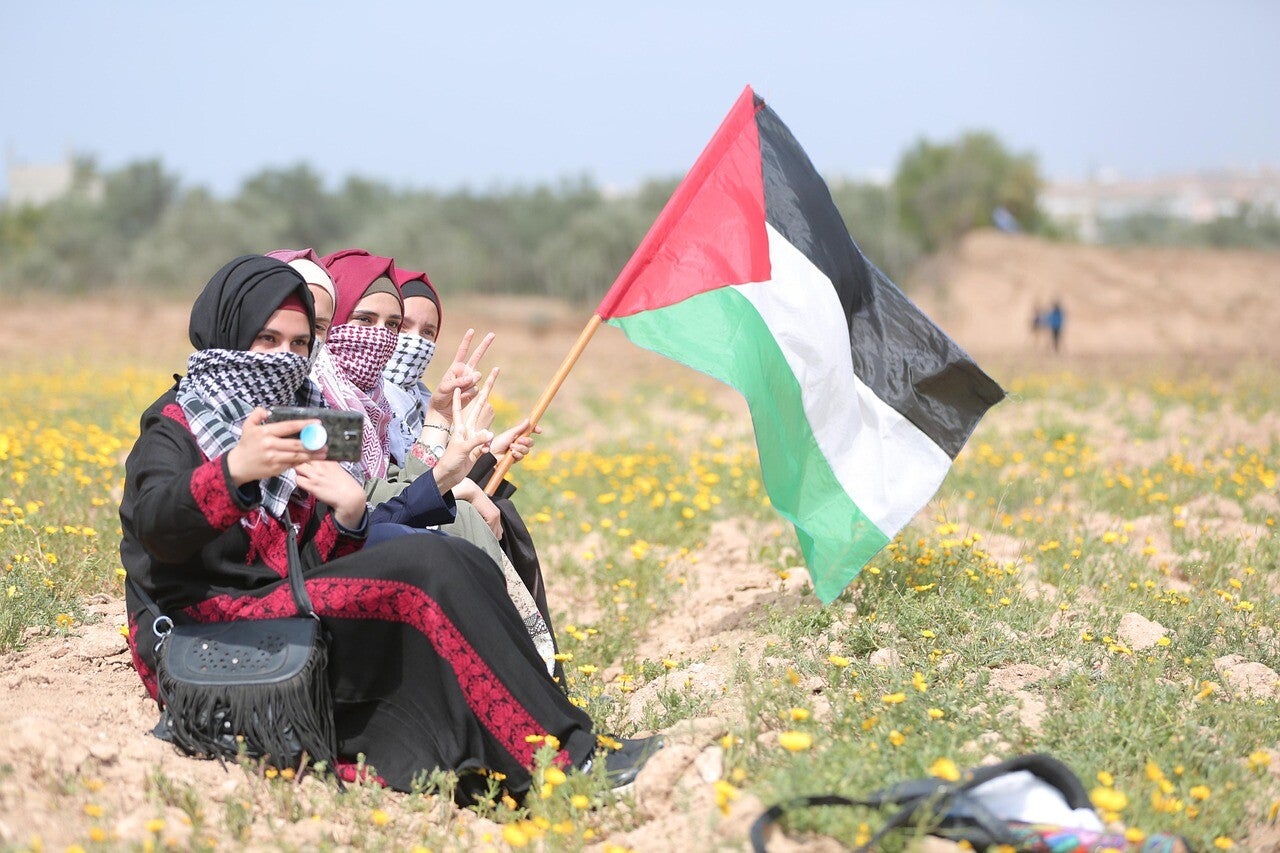
Briefing on Palestine, Israel and Antisemitism
This pdf document details the history of the establishment of the state of Israel, Zionism, and Antisemitism.
News sources and Books
Electronic Intifada
Palestine Chronicle
DeClassified UK
B'Tselem
Middle East Eye
MondoWeiss
MediaLens
Jonathon Cook
Caitlin Johnstone
Edward Said "After the Last Sky"
Gideon Levi "The Punishment of Gaza"
Miko Peled "The General's Son"


Links
Stroud Palestine Solidarity Campaign https://pscstroud.org/
Palestine Solidarity Campaign (National) https://palestinecampaign.org/
PSC South West England https://palestinecampaign.org/south-west-england/
Boycott, Divest and Sanctions Movement https://bdsmovement.net/
This is a report that details the impact of the attack on 7th Oct. 2023 by Hamas on Israel
Amnesty International Report on Genocide in Gaza 2024

FILMS ABOUT PALESTINE.
The Iron Wall https://youtu.be/EwuU_MXXdBI?si=oEnbhFjbBqkL2Xav
San Jose Peace & Justice Center – Free Films on Palestine
Contains dozens of films including:
– Keeper of Memory
– Empty Seat
– Resistance Pilot
– Jenin
– The Olive Tree
– Scenes from the Occupation in Gaza
– Gaza Fights for Freedom
– Arna’s Children
– Wedding in Galilee
– Keffiyeh
Free, Full-Length Version of Tantura (2022)
Internet Archive – Free to Download & Stream
This is the most reliable completely free source found in your search results.
Watch here:
https://archive.org/details/tantura-2022_202401
[archive.org]
This link provides:
• Full 1h 34m documentary
• Free streaming
Cinema Politica – Four Palestinian Films Free to Stream
Available for free until the stated date on their platform (check link for availability):
– ZINCO
– Notes on Displacement
– Little Palestine
– 3000 Nights
Here is the official Cinema Politica website:
https://www.cinemapolitica.org/
further free films about Palestine:
savoirflair.com
waterjusticeinpalestine.org
Sabeel-Kairos.org.uk
How the West paved the way for today’s tragedy in Gaza
The vilification and attempts to marginalise Hamas have contributed to the tragedy in Gaza today. When, in 2006, it tried the electoral route and won, this result was considered unacceptable to those western powers – especially the USA – claiming to support democracy (unless it does not produce the “desired” result.) “This is a story of Western manipulation that provoked a Palestinian civil war, set the scene for Israel’s devastating blockade of Gaza, and forced Hamas away from seeing the ballot box as a route to political change.” (my emph LL)
Why, for example, doesn’t the media consider why Hamas got so much support in January 2006? What might have happened if the West had accepted the result? Mandy Turner provides the facts as well as thoughtful reflections on yet another aspect of western culpability.
LL
This article was originally published by New Arab on Thu 5 Feb 2026. Read the original here.
How Western policy in Gaza paved the way for 7 October attacks
On 25 January 2006, an election took place in the occupied Palestinian territory. When the results were announced, it sent shockwaves throughout the Middle East and beyond. Hamas had won, receiving 76 of the 132 seats. Twenty years after Hamas’ election victory in the OPT, Mandy Turner reflects on the consequences of Western sanctions and the civil war that it provoked.
by Mandy Turner, New Arab
The future for Palestinians looks bleak. Gaza’s traumatised population remains trapped in a struggle for survival during a genocide that’s gone on for more than two years. Meanwhile, the West Bank is experiencing its highest levels of Israeli military and settler violence since records began. But instead of facing trial in the Hague for war crimes, Israel has come out on top again. Freedom and dignity for Palestinians is more distant than ever.
In this context, it may seem absurd to reflect on events 20 years ago. But the seeds of today’s disastrous situation were planted back then because it led to the split between the West Bank and Gaza and drove a deep, bitter division in Palestinian politics.
This is a story of Western manipulation that provoked a Palestinian civil war, set the scene for Israel’s devastating blockade of Gaza, and forced Hamas away from seeing the ballot box as a route to political change.
Hamas steps into the election arenaOn 25 January 2006, an election took place in the occupied Palestinian territory. When the results were announced, it sent shockwaves throughout the Middle East and beyond. Hamas had won, receiving 76 of the 132 seats in the Palestinian Legislative Council, the Palestinian parliament. With a 77% voter turnout, Hamas believed it had received a strong message from the electorate.
Palestinians were tired and cynical of endless peace talks with no movement towards sovereign statehood. The occupation had tightened, settlements had expanded, and Israel’s violent military response during the second intifada had destroyed hope of a negotiated two-state solution. Resentment was high and Hamas harnessed it.
This was the first time Hamas had participated in nationwide democratic elections. It had boycotted the first PLC election in 1996 because it opposed the Oslo Accords. But a decade later, with the deadline of 1999 for a final peace settlement long passed, Hamas decided to stand for election. The party had done well in municipal elections in 2005, so perceived this as an endorsement of its policies.
Tareq Baconi, author of Hamas Contained, argues that neither armed struggle nor Islamic ideology featured prominently in the party’s electoral platform. Instead, most voters were attracted by Hamas’s promises to end corruption and renegotiate the Oslo Accords.
During the election campaign, Hamas politician Muhammad Abu Tir said: “We’ll negotiate [with Israel] better than the others, who negotiated for 10 years and achieved nothing.” Hamas was offering a strategy of resistance and hard negotiations with Israel.
An unanticipated shock resultWashington and Brussels funded the process and the US claimed that if the elections were free and fair, which they were according to the European Union Election Observation Mission, it would recognize the result. But neither anticipated Hamas’s success.
It was also a shock to Fatah, the party that had dominated Palestinian politics since the creation of the Palestinian Authority in 1994, and long before through the PLO and towering personality of its first leader Yasser Arafat.
Long-standing tensions between Fatah and Hamas meant there was no love lost between the two rival parties. Despite this, President Mahmoud Abbas, who also chaired Fatah’s central committee, initially saw Hamas’s election as the first steps to decommission it through political integration. This view was shared by some European governments.
But the US had a different viewpoint. Instead, it tried to overturn the election result through a covert operation which provoked a Palestinian civil war. The US planned to fund Fatah to the tune of $1.27 billion to overthrow the Hamas administration. This was yet another scandalous project by the US to manipulate local politicians and provoke a coup against a democratically elected government.
Bankrupting the Hamas administrationEconomic pressure was easily applied. The US stopped its funding to the Palestinian Authority and pressured other governments to do the same. It also used its dominant position in the diplomatic Quartet, which included the EU, Russia, and the UN, to promote a hard-line approach.
On 30 January, the Quartet issued a statement that future aid and diplomatic relations was contingent upon the new government committing to non-violence, recognising Israel, and accepting previous agreements.
Hamas refused the Quartet’s demands, insisting it had a strong mandate from the Palestinian electorate to renegotiate all deals with Israel.
The Quartet responded by shutting off aid. This provoked a financial crisis. Funds from the US and the EU to the Palestinian Authority had constituted $1 billon in 2005. Israel also stopped transferring the taxes and customs revenue it collected on behalf of the Palestinian Authority – about $50 million every month. The US Treasury prohibited transactions with the Palestinian Authority meaning that the banking sector ground to a halt. Public sector workers went unpaid and the economy went into meltdown.
Hamas Flag (Photo Svet foto, shutterstock)
The US scuppered attempts at a unity government between Hamas and Fatah and put pressure on Abbas to announce a state of emergency and form a government without Hamas. But this didn’t work. So, it went for a more covert approach. Arms shipments were made to Fatah in Gaza and money was paid directly into accounts controlled by Abbas.
As tensions increased, violence spiralled out of control into a war between Hamas and Fatah.
A CIA-backed coupOn 30 April 2007, Jordanian newspaper Al-Majd published a leaked draft of the plan that looked like a CIA-backed Fatah coup against Hamas. Other leaks provoked Hamas to act.
In mid-June, after intense gunbattles, Hamas took control of Gaza. The world’s media reported it as a Hamas coup, but David Wurmser, Middle East advisor to US vice-president Dick Cheney, argues that Hamas acted to prevent a coup by Fatah.
This was a historic turning point.
These actions led to the administrative division between the West Bank and Gaza, which created two separate governments funded from different sources. Political rivalry between Fatah and Hamas deepened into intense hatred, which has paralysed the Palestinian national movement ever since.
Israel instituted a devastating blockade on Gaza, legitimised by Western proscription of Hamas as a terrorist organisation and refusal to work with it even with a democratic mandate.
Since then there has been at least five Israeli bombardments of Gaza, often referred to as “mowing the grass” – the despicable dehumanizing metaphor Israel uses for killing Palestinians by mass bombing. International attempts to stop Israel were non-existent, even when it gunned down Palestinian civilians during the Great March of Return weekly demonstrations in 2018 and 2019.
The whole of Gaza was being punished. This was a pressure cooker situation.
Then came the attack on Israel of 7 October 2023 by Hamas and other groups. Israel responded by committing a genocide that has so far killed at least 70,000 Palestinians and destroyed Gaza’s infrastructure and way of life.
What might have happened if instead of isolating the Hamas government Western states had engaged with it? What might have happened if the US had not quashed Hamas’s entry into democratic politics and provoked a civil war between Hamas and Fatah?
The decisions made by Western states, particularly the US, twenty years ago led directly to the tragedy of today.
Mandy Turner is a senior researcher with Security in Context. Her research focuses on the political economy of conflict and peace, humanitarianism and multilateralism, and the situation in Palestine and Israel.
Have questions or comments? Email us at: editorial-english@newarab.com
Opinions expressed in this article remain those of the author and do not necessarily represent those of The New Arab, its editorial board or staff, or the author’s employer.
ORIGINAL ARTICLE
https://www.jewishvoiceforlabour.org.uk/article/how-the-west-paved-the-way-for-todays-tragedy-in-gaza/?utm_source=mailpoet&utm_medium=email&utm_source_platform=mailpoet&utm_campaign=today-on-the-jvl-blog-newsletter-total-articles-for-you_1
Britain’s Index of Repression’ documents 964 incidents of anti-Palestinian crackdown
A new report by the European Legal Support Centre (ELSC) has documented 964 verified incidents of anti-Palestinian repression across Britain between January 2019 and August 2025, identifying what it describes as a cross-sector pattern of institutional crackdowns on Palestine solidarity.
The findings form part of Britain’s Index of Repression, a searchable national database developed in collaboration with Forensic Architecture and launched today at the Frontline Club in London.
Documented incidents listed in the database include arrests, workplace dismissals, suspensions and event cancellations. The Index, originally launched in Germany in 2025, is now publicly available for Britain and is described as the first accessible database of its kind in the country.
The data indicates a marked escalation in incidents after October 2023, with the publication following what the press briefing describes as a significant post-Gaza rise in recorded cases.
The report identifies a broad range of actors involved in the repression of Palestine solidarity, with law enforcement and state-linked bodies featuring prominently. Police and security personnel were involved in 220 documented incidents, making them the single most frequent actor. Educational institutions were responsible for 192 incidents, while pro-Israel advocacy and lawfare groups were linked to 141 cases. Journalists and media actors were involved in 113 incidents.
The data also shows that repression disproportionately targets those embedded in public institutions and organising spaces. Students, academics and teachers were the most frequently targeted group, accounting for 336 incidents. Activists and organisers followed, with 229 cases. Public and private sector workers together faced 169 incidents, while 71 cases involved artists and cultural workers.
“From smear to sanction”
The report describes a recurring three-stage pattern in how repression unfolds.
It begins with what the authors term “smear and distortion”, accounting for 261 incidents involving censorship, disinformation campaigns and public accusations. These allegations are then taken up by institutions. In 136 cases there were threats of legal action, in 81 cases threats to employment or funding, and in 41 cases demonstration bans or event cancellations. A further 114 incidents involved formal disciplinary sanctions in schools, universities or workplaces.
The final stage involves direct enforcement. The report documents 131 arrests or law enforcement interventions, 111 cases of harassment, doxing or surveillance, and 90 incidents resulting in legal, financial or professional consequences.
The report argues that this architecture of repression is structured around two recurring allegations directed at Palestine solidarity movements: anti-Semitism and support for terrorism. It identifies the highly controversial IHRA Working Definition of Antisemitism and the Terrorism Act 2000 as central enabling instruments.
IHRA has been widely criticised, including by its lead drafter, Kenneth Stern. Stern has warned that the definition has been weaponised against critics of Israel and misused to suppress legitimate political speech.
The notorious legal firm, UK Lawyers for Israel (UKLFI) was mentioned in the report. The study found that UKLFI was involved in 128 incidents leading to institutional repression of Palestine solidarity.
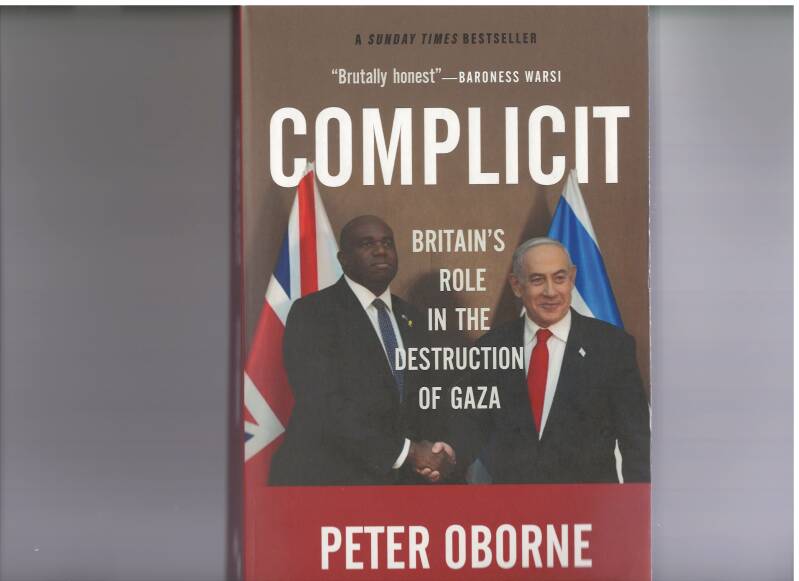
COMPLICIT by Peter Oborne. Published by OR books
Sub-title and theme ‘Britains role in the destruction of Gaza’. Amazon or e-bay c£14.
Peter Oborne used to be Chief Political Commentator at the Daily Telegraph and a former political editor of The Spectator. These are not the credentials of one who you would expect to write about Gaza but Oborne belongs to that disappearing tradition of journalists who seek to separate fact from opinion and who believe in old fashioned ideas like truth and objectivity. Perhaps predictably, none of the mainstream media have reviewed Oborne’s book.
The bulk of the book is a forensic and detailed analysis of what has gone on and the complicity of Britains media and political class in the genocide in Gaza and the way in which groundless allegations of antisemitism were weaponised against those who opposed it. It is hard to read and hard to believe that our country could do such a thing, but it makes it an indispensable source of information..
In one paragraph he encapsulates our predicament...’Politicians and media portray the marchers as anti-British. In truth they profoundly represent British Values as these have traditionally been understood: belief in fairness, tolerance, the rule of law. Standing up for the underdog. Compassion, kindness, a sense of decency. A belief in community, solidarity and human rights and a conviction that we owe a duty not just to ourselves and our own communities but to all human beings’.
The tone of the book up to the conclusion is calm and objective but then explodes into a thunderous rage that I suspect is bottled up in all of us.
It has not yet dawned on most politicians, but Gaza has changed everything. Britain had the vestige of a reputation for decency or believed it had. Gaza has entirely trashed it. In British political history there will be ‘Before Gaza and After Gaza’. Most of the rest of the world is clear about this. Gaza is a crime that Britain is in denial about.
It is noteworthy in the media coverage of Starmer’s departure there is hardly a word about his appalling behaviour regarding the genocide.
As the years go by, he will be vilified more and more as the truth emerges. We must make sure that he is and that his accomplices like Yvette Cooper, Shabana Mahmood and David Lammy are brought to account for what they have done.
UN REPORT:
Israel continues to commit genocide and other atrocity crimes by deliberately targeting Palestinian children
16th June 2026
A landmark report by the UN Independent International Commission of Inquiry on the Occupied Palestinian Territory accuses Israel of committing genocide, crimes against humanity, and war crimes against Palestinian children. It details the unprecedented scale of child fatalities, deliberate sniper and drone attacks, and systematic denial of humanitarian aid. [1, 2, 3]
UN Commission of Inquiry Key Findings
- Unprecedented Casualties: The UN documented that at least 20,179 Palestinian children were killed, over 44,000 injured, and nearly 58,000 orphaned since the onset of the war. [1]
- Evidence of Deliberate Targeting: Investigators concluded there are reasonable grounds to believe the Israeli security forces engaged in deliberate attacks on children using precision drones and sniper fire, often targeting the head and upper body. [1]
- Systematic Starvation: By systematically denying humanitarian assistance and targeting child-essential infrastructure like maternity centers, the commission found Israel imposed conditions intentionally designed to destroy the Palestinian population. [1, 2]
Humanitarian and UN Agency Perspectives
- The UN Office of the High Commissioner for Human Rights released the 94-page document outlining how these violations establish "genocidal intent" by Israeli authorities. [1, 2]
- UNICEF emphasized the devastating physical and mental trauma affecting the newest generation, with almost every child in Gaza in need of psychosocial support. [1, 2, 3, 4]
- Save the Children has called the findings "harrowing" and urged the international community to hold perpetrators accountable. [1]
Official Israeli Rebuttal
- The Israeli Ministry of Foreign Affairs condemned the report outright, calling it a "libelous sham". [1]
- Israeli officials rejected the Commission as a "fundamentally flawed mechanism whose very purpose is to single out and vilify Israel rather than seek the truth". [1]
- Israel’s UN mission stated that the report "completely erases Israeli children who were brutally murdered, kidnapped, and targeted by Hamas, while ignoring Hamas' cynical use of Palestinian children as human shields". [1]
Perspectives from the Ground
Srinivasan Muralidhar, Chair of the Commission, and Commissioner Chris Sidoti presented the findings in Geneva, detailing harrowing testimonies. [1, 2]
“Children are being killed mainly in two ways. One, through airstrikes using high-yield explosives with wide area effects. And second, using quadcopters, drones, and sniper rifles that specifically target and kill children. To their head and upper body.”
UN Media
“There can be no doubt in anyone who reads today's report that every international legal norm has been violated by the actions of the Israeli authorities towards Palestinian children and they need to be held accountable.
FULL REPORT.....https://www.ohchr.org/sites/default/files/documents/hrbodies/hrcouncil/sessions-regular/session62/a-hrc-62-crp-2.pdf
Create Your Own Website With Webador